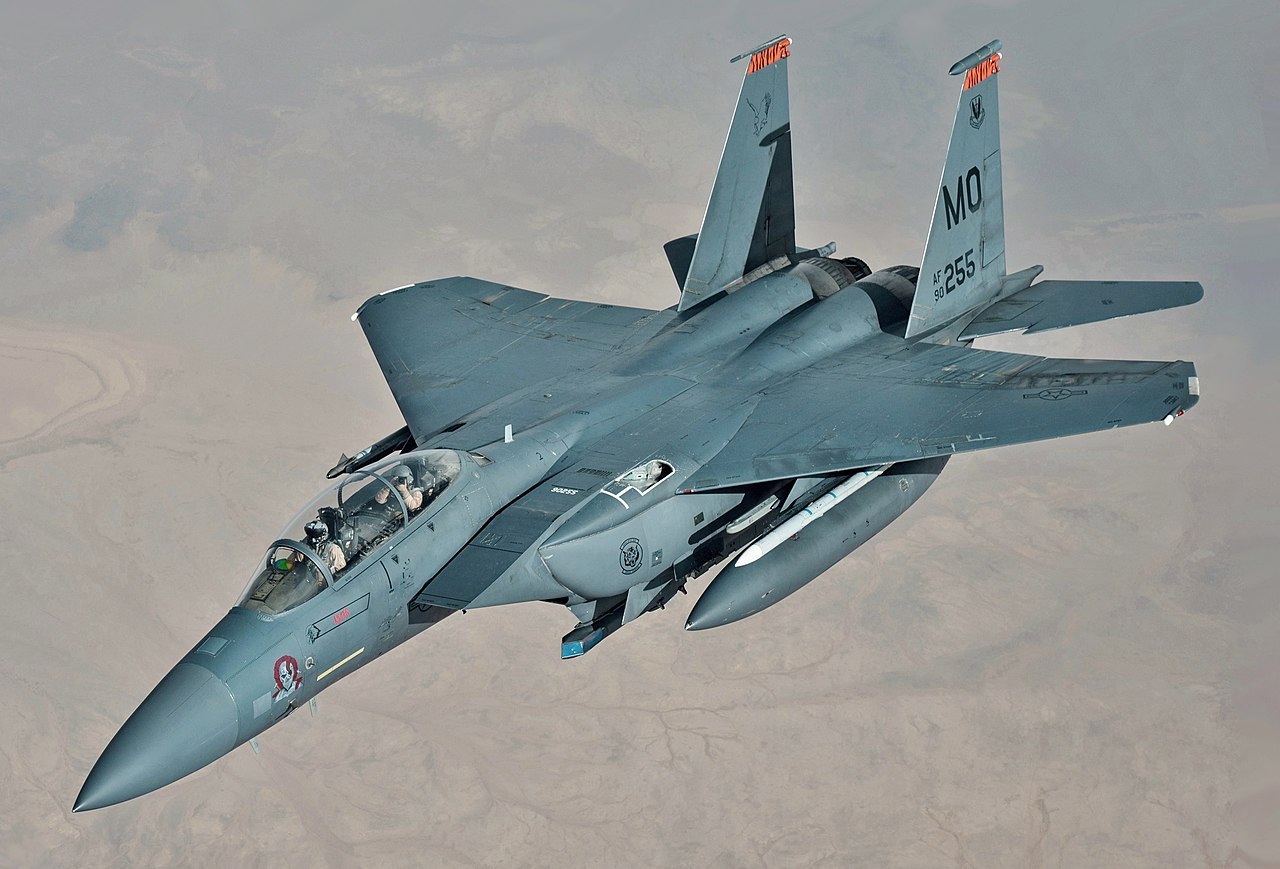
F-15E Shootdown: Lessons from Kuwait's Air Combat Misidentification
The skies over conflict zones are inherently complex, a dynamic ballet of friendly, hostile, and unknown entities. On March 1st, this intricate dance took an unfortunate turn when three American F-15E Strike Eagle jets were accidentally shot down by Kuwaiti air defense forces. This harrowing "friendly fire" incident, occurring amidst active combat operations, serves as a stark reminder of the immense challenges in modern air warfare and the critical importance of accurate identification. All six American airmen aboard the powerful multirole jets safely ejected and were recovered, thankfully reported to be in stable condition. This incident involving a US jet in Kuwait, officially acknowledged by Kuwait as a regrettable error, highlights the thin line between success and tragedy in high-pressure military operations, particularly for an Amerikaanse straaljager in Koeweit operating within a coalition.
The event, which transpired near the US military base Ali Al Salem, has triggered an in-depth investigation by US Central Command (Centcom). While the immediate crisis was averted with the safe recovery of personnel, the broader implications for allied coordination and air defense protocols are profound. It underscores that even with cutting-edge technology, the human element and procedural integrity remain paramount in preventing such devastating misidentifications. You can read more about the initial incident details in Kuwait Accidental Shootdown: US F-15E Jets Hit by Friendly Fire.
The Unfortunate Incident: Details of the F-15E Shootdown
On that fateful day, three F-15E Strike Eagles, robust multirole combat aircraft known for their versatility in air-to-air and air-to-ground missions, were operating in a highly contested airspace. The United States Central Command confirmed that these American jets in Kuwait were engaged in defensive actions against a barrage of Iranian attacks, including hostile aircraft, ballistic missiles, and drones. It was during this intense, multi-threat environment that the Kuwaiti air defense systems erroneously targeted and brought down the allied aircraft.
The rapid succession of events placed immense strain on Kuwait's air defense operators. In such dynamic scenarios, where multiple threats emerge simultaneously, the window for decision-making shrinks dramatically. Centcom promptly reported the successful rescue of all six crew members, commending the efforts of the Kuwaiti armed forces in their support for the ongoing operation. Kuwait quickly acknowledged the incident, attributing it to a procedural error within a highly complex air combat setting. This admission highlights the difficulty faced by any air defense system under duress, especially when attempting to distinguish between friend and foe with lightning speed.
The F-15E Strike Eagle, a cornerstone of the US Air Force's combat fleet, is equipped with advanced avionics, radar, and communication systems, including state-of-the-art Identification Friend or Foe (IFF) technology. Despite these technological safeguards, the incident demonstrates that no system is entirely foolproof, particularly when human perception, operational pressure, and the chaos of real combat converge. The tragedy underscores the fragility of even the most robust military operations when faced with unforeseen circumstances and rapid-fire decisions.
Navigating the Fog of War: Challenges in Complex Airspace
Modern air combat environments are vastly different from those of previous generations. They are characterized by a "fog of war" that extends beyond mere visibility to encompass an overwhelming deluge of real-time data, multiple threat vectors, and the necessity for instantaneous decision-making. The shootdown of the US fighter jet in Kuwait is a powerful illustration of these challenges.
The Triple Threat: Missiles, Drones, and Aircraft
The Kuwaiti air defense was reportedly under significant pressure, responding to a simultaneous onslaught of ballistic missiles, unmanned aerial vehicles (UAVs), and traditional enemy aircraft. This creates an incredibly noisy and confusing radar picture. Each blip, each signal, must be analyzed and identified in seconds. When an unknown or ambiguous signal appears, the default protocol in a high-threat environment often leans towards assuming hostility, an understandable but dangerous predisposition.
Limitations of Advanced Technology
While advanced IFF systems are designed to prevent friendly fire incidents by electronically identifying allied aircraft, their effectiveness can be hampered by various factors:
- Interoperability Issues: Even among allies, different generations or manufacturers of IFF systems can lead to compatibility challenges or misinterpretations.
- System Malfunctions: Equipment, both on the transmitting (aircraft) and receiving (air defense) ends, can malfunction or be configured incorrectly.
- Environmental Factors: Electronic warfare, jamming, or atmospheric conditions can degrade IFF signals.
- High-Volume Traffic: In a dense airspace with many aircraft, identifying specific IFF codes can become overwhelming for operators.
The incident reminds us that technology is a tool, not a panacea. The interface between complex systems and human operators requires flawless execution under extreme stress. More insights into the pressures faced by air defense can be found in Friendly Fire in Kuwait: High-Pressure Air Defense & F-15E Incident.
Beyond Technology: The Human Element and Procedural Gaps
Even the most sophisticated technology requires precise human input and interpretation. In situations involving multiple threats, such as those faced by Kuwaiti air defense, human factors become critical vulnerabilities. Rapid decisions under extreme pressure can lead to cognitive biases, tunnel vision, or misinterpretation of data.
The Psychology of Decision-Making Under Stress
When lives are at stake and seconds count, stress can impair cognitive functions, leading to:
- Reduced Situational Awareness: Operators might miss crucial cues or focus too narrowly on one threat.
- Confirmation Bias: A predisposition to interpret ambiguous signals as hostile if the overall threat level is high.
- Fatigue: Prolonged high-alert status can lead to mental exhaustion, degrading performance.
These psychological elements, when combined with technical glitches or communication breakdowns, create a dangerous recipe for friendly fire. The incident with the Amerikaanse straaljager in Koeweit demonstrates how easily human and technical errors can escalate in such an environment.
The Imperative of Tight Procedures and Training
The Kuwaiti incident underscores the non-negotiable need for stringent, frequently updated operational procedures and rigorous training. These procedures must cover:
- Clear Rules of Engagement (ROE): Unambiguous guidelines on when and how to engage targets, especially in coalition operations.
- Robust Communication Protocols: Reliable, redundant, and secure communication channels between all allied forces.
- Advanced Simulation Training: Realistic simulations that expose operators to high-stress, multi-threat scenarios, including IFF failures and communication jams.
- Post-Incident Review Mechanisms: A transparent and thorough process for analyzing incidents to extract lessons learned.
Ultimately, the aim is to create a seamless operational environment where every operator, regardless of nationality, understands and trusts the systems and procedures in place.
Lessons Learned and Preventing Future Misidentifications
The accidental shootdown of the F-15E Strike Eagles, while tragic, offers invaluable lessons for all military forces operating in coalition environments. Preventing future misidentifications requires a multi-faceted approach focusing on technology, training, and human factors.
Enhanced Interoperability and IFF Systems
A primary lesson is the critical need for even greater interoperability among allied IFF systems. This includes:
- Standardized Protocols: Ensuring all coalition forces utilize compatible IFF modes and codes.
- Next-Generation IFF: Investing in and widely adopting more robust, secure, and resilient IFF technologies.
- Fused Sensor Data: Integrating data from various sensors (radar, IFF, electro-optical) to provide a more comprehensive and unambiguous picture to operators.
Refined Training and Coalition Exercises
Training scenarios must evolve to reflect the complexities of modern battlefields. This means:
- High-Fidelity Simulations: Regular, immersive exercises that push operators to their limits in multi-threat, IFF-compromised, and communication-disrupted environments.
- Cross-National Training: More joint exercises with coalition partners to build familiarity, trust, and shared understanding of operational procedures.
- Human Factors Training: Educating operators on stress management, cognitive biases, and decision-making under pressure.
Clearer Rules of Engagement and Communication
The incident also underscores the importance of regularly reviewing and updating Rules of Engagement (ROE) to ensure they are clear, concise, and applicable to dynamic threat environments. Furthermore, establishing redundant and secure communication channels, coupled with strict communication protocols, is vital for immediate clarification of ambiguous contacts.
The swift acknowledgment and cooperative investigation following the incident involving the American jet in Kuwait highlight a strong alliance, but also the universal truth that vigilance and continuous improvement are essential to prevent such errors from recurring. Every near-miss and friendly fire incident serves as a painful, yet powerful, catalyst for reform and innovation in the ever-evolving landscape of air defense.
Conclusion
The accidental shootdown of three US F-15E Strike Eagles by Kuwaiti forces stands as a sobering reminder of the inherent dangers and complexities of modern air combat. While thankfully all six airmen survived, the incident unequivocally demonstrates that even with the most advanced aircraft and sophisticated air defense systems, the "fog of war"—compounded by multiple threats, high-pressure decisions, and the irreducible human element—can lead to devastating misidentifications. This event underscores the urgent need for continuous investment in interoperable technologies, rigorous and realistic joint training, and the refinement of robust operational procedures among allied nations. By meticulously dissecting such incidents and implementing proactive measures, the international community can strive to minimize friendly fire, safeguard precious lives, and ensure more effective and coordinated operations in the challenging skies of tomorrow. The lessons from this unfortunate encounter involving the Amerikaanse straaljager in Koeweit will undoubtedly shape future air defense strategies and training protocols for years to come.